
Faster Heat Out, Terminals Protected: Inside Our DC Filter Capacitor Patent
Patented technology · 2026-10-09 · 2 min read
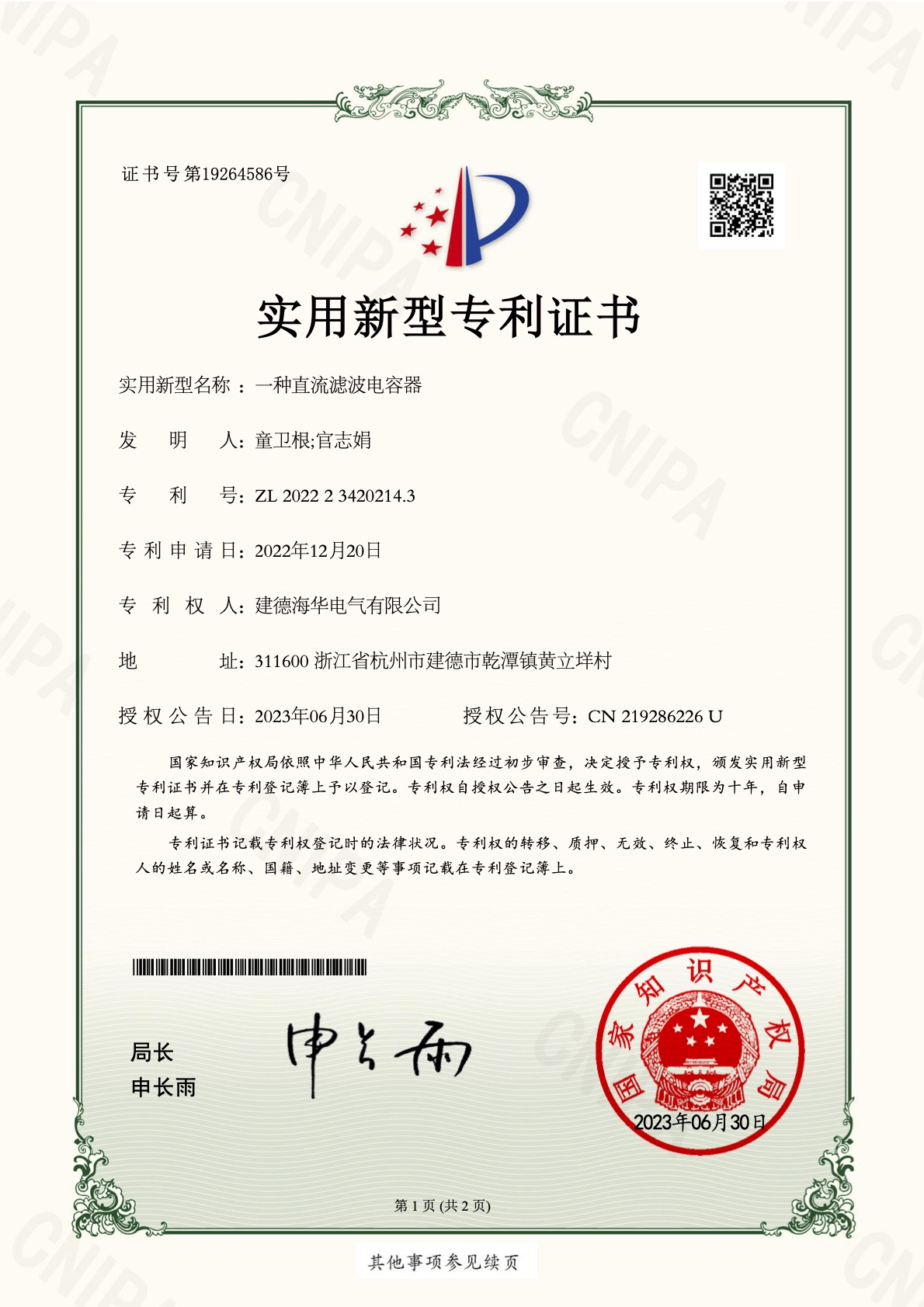
DC filter capacitors run continuous ripple current, which means heat management is a constant job, not an occasional one, and the terminal end of the unit is exposed to damage whenever the capacitor sits idle in storage or transit. Utility model patent CN219286226U ("DC filter capacitor with heatsink fins and latch-release terminal cover," granted 2023) addresses both in one structure.
The problem it solves
- Heat has to leave the core efficiently. Ripple current under continuous DC-link duty generates heat that has to be moved away from the element, not allowed to build up.
- Airflow inside the housing matters. A sealed can with no circulation traps heat around the core.
- Idle terminals get damaged. Electrode terminals left exposed before installation are vulnerable to accidental knocks.
How the patent works
A thermally conductive insulating adhesive carries heat from the core to a metal heatsink plate mounted on the housing, and heatsink fins on that plate increase the surface area available for dissipation. Vent holes in the housing add air circulation around the core. At the terminal end, a protective cover shields the electrode terminal body when the capacitor isn't in service. Pressing a slide plate drives a connecting rod that pushes a transmission block, withdrawing a positioning rod from the housing and releasing the cover for removal only when the unit is ready to be installed.
What this means for you
For DC-link and filtering applications running continuous ripple current, this design combines a dedicated heat path with a terminal that stays protected until the moment of installation, reducing both thermal derating risk and field damage to connections.