
Self-Healing Film, Protected Terminals: Reliability Built into Our Low-Voltage Shunt Capacitor
Patented technology · 2026-08-05 · 2 min read
Self-healing dielectric film is well established in low-voltage capacitor design, but the terminals that connect the element to your system are just as often the point of failure. Utility model patent CN219286229U ("Self-healing low-voltage shunt capacitor with overload protection and terminal guard," granted 2023) addresses both halves of that reliability picture in one structure.
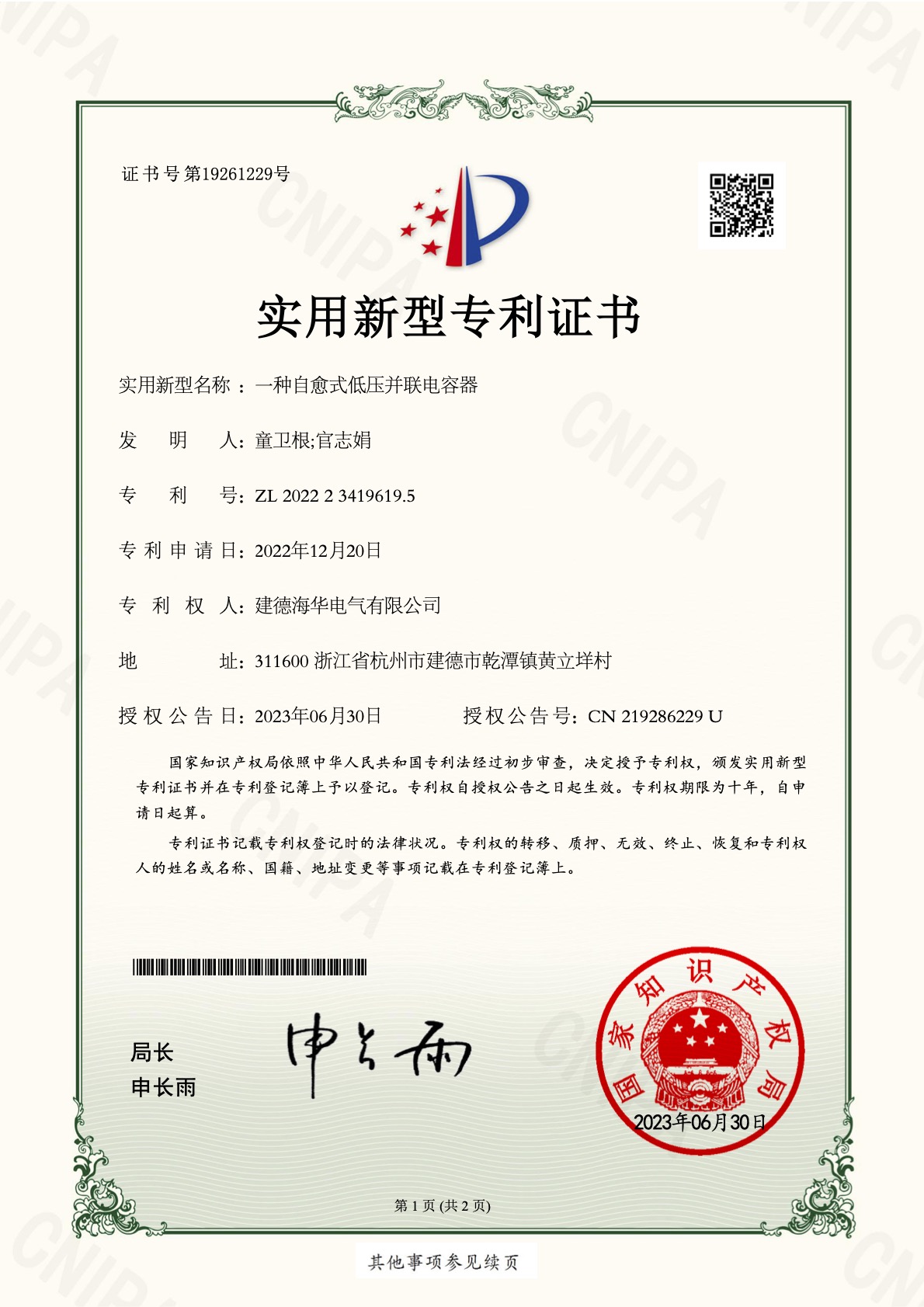
The problem it solves
- Exposed terminals are vulnerable. Left unprotected, connection posts are exposed to knocks, contamination, and accidental contact.
- Loose connections degrade over time. Vibration and thermal cycling can work external leads loose if they aren't positively clamped.
- Overload events need a local response. Without protection wired close to the element, a sustained overload has no first line of defense.
How the patent works
Inside the housing, capacitor elements sit between multiple fixing plates mounted to the base plate, with a partition carrying an overload protector wired directly to the elements. Terminal posts on the top cover connect to that protector, and a dedicated guard structure on the cover shields the posts from exposure. The guard also clamps the external lead in place, holding the connection secure against vibration, while the internal layout improves airflow and heat dissipation around the element.
What this means for you
For low-voltage shunt capacitor installations where terminals are handled in the field, this design pairs self-healing element technology with protected, securely clamped terminations and local overload protection, reducing failure points at both the element and the connection.